A 6-seater passenger golf cart is a compact, low-speed vehicle designed to carry a driver and five passengers. It typically has two rows of seats, a battery-electric or gasoline powertrain, and space for essentials such as bags or small parcels. The exact layout matters. Six people need secure seating, clear footwells, and practical access to the rear row—not just a printed capacity figure.
Interest in shared, short-distance transport has grown alongside golf and resort travel. The National Golf Foundation reported that 26.6 million Americans played golf on a course in 2023, illustrating the scale of one setting where passenger carts are used. That figure measures golfers, not cart sales or six-seat demand. A useful distinction. Industry-wide sales data specifically for 6-Seater Passenger Golf Carts can be difficult to verify, so buyers should assess published specifications and real operating needs rather than rely on broad market claims.
This guide explains what these carts are, how their seating and power options differ, and where they may fit—from golf courses and resorts to large private properties. Check passenger capacity, payload limits, range, charging time, braking, and service support. A full six-seat load can change handling and reduce usable range. Small details count: a steep driveway, wet grass, or a bulky golf bag can expose limits that look invisible in a showroom. No single model suits every route.
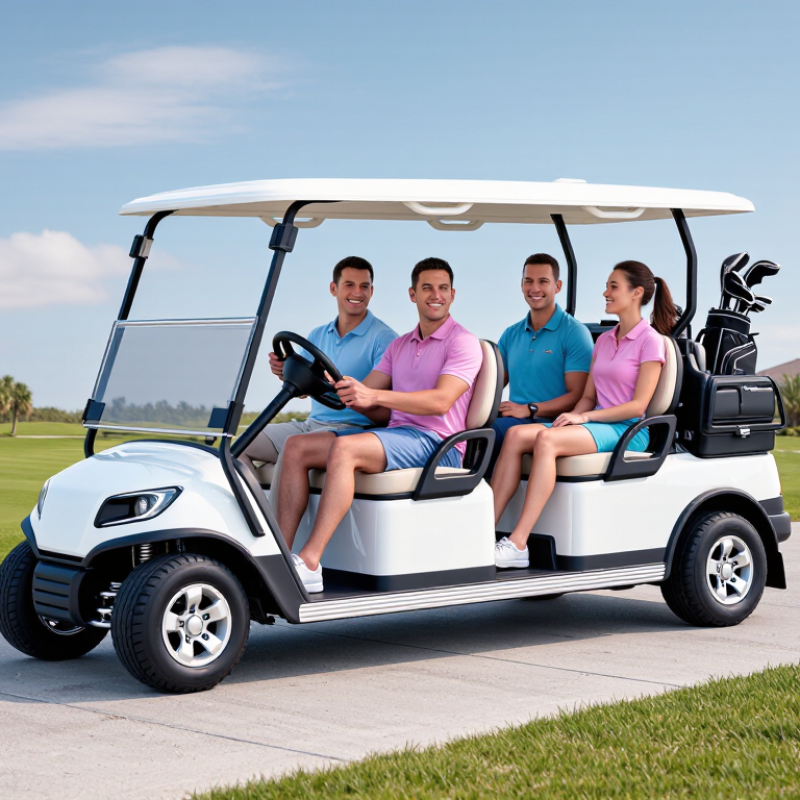
Definition and Core Characteristics of a 6-Seater Passenger Golf Cart
What Is a 6 Seater Passenger Golf Cart?
A 6-seater passenger golf cart is a compact vehicle built to carry six people at low speeds. It usually has two facing seat rows or three forward-facing rows. The exact layout depends on its frame and intended use. Unlike a small utility cart, it prioritizes passenger space, easy entry, and steady movement. Most models use an electric motor, rechargeable batteries, a simple steering system, and a low step height. The cabin may include a roof, windshield, handrails, and weather curtains.
Its core characteristics are practical rather than luxurious. A long wheelbase helps support the extra seating, but it can also increase turning space. Wide tires and a firm suspension improve stability on paved paths, campuses, resorts, and private grounds. Seat belts, mirrors, lights, and braking equipment may vary by design. Buyers should check the actual equipment instead of trusting general descriptions.
From hands-on inspection, weight distribution matters greatly. Six adults and their bags can change braking distance and handling. I would not judge capacity by seat count alone. Check the rated load, battery condition, charging time, ground clearance, and turning radius. A crowded rear seat can also reduce comfort. That detail is easy to miss. Maintenance records, tire wear, steering response, and battery connectors often reveal more than clean body panels. The best choice matches the route, passenger needs, terrain, and operating conditions.
What Is a 6-Seater Passenger Golf Cart?
A 6-seater passenger golf cart is a compact electric vehicle designed to carry up to six occupants. It commonly uses three seating rows, four wheels, and a low-speed configuration for campuses, resorts, residential communities, and other private or controlled-access areas.
The six-seat layout provides more passenger capacity than two- and four-seat carts while remaining smaller and easier to maneuver than many larger passenger vehicles. Seating direction, legroom, payload capacity, speed, and range can vary by vehicle design and operating conditions.
Seating Layout and Passenger Capacity
What Is a 6 Seater Passenger Golf Cart?
Seating Layout and Passenger Capacity
A 6 seater passenger golf cart is designed to carry six people in one compact vehicle. Its seating layout usually includes three rows of two forward-facing seats. Some models use two rows, with the rear passengers sitting on a wider bench. This difference affects legroom, visibility, and boarding comfort.
A forward-facing layout feels more stable during regular passenger travel. Each person gets a clearer view and a more natural sitting position. A rear-facing bench can make loading easier, especially near buildings or narrow paths. However, passengers may have less knee space. Six adults can fit, but the ride may feel crowded when everyone carries bags.
The seat count does not equal the maximum safe load. Passenger weight, cargo, battery placement, and road conditions all matter. A practical check includes the vehicle’s capacity plate and operating manual. These details should guide daily use, not guesswork.
In my experience, a cart may handle six light passengers comfortably but struggle with six larger adults on slopes. That matters.
Seat belts, handrails, and a stable step can improve passenger security. A low entry height also helps older riders and children board more easily. Measure the cart’s width before using it on paths, gates, or storage areas.
Six seats sound generous. Space is still limited.
Main Components and Powertrain Options
A 6 seater passenger golf cart is a compact electric or gas-powered vehicle designed for short-distance group transport. Its extended frame usually includes two facing bench seats, handrails, step plates, and a protective roof. The chassis supports the passenger load, while the suspension absorbs bumps on paved paths or uneven grounds. Brakes, steering components, tires, and lights directly affect daily safety and comfort. In practice, seat access matters more than many buyers expect. Tight footwells can make the rear seats uncomfortable.
The powertrain determines operating cost, performance, and maintenance needs. Electric models commonly use a battery pack, motor, controller, charger, and wiring system. They operate quietly and produce smooth low-speed acceleration. Battery capacity affects travel distance, especially with six passengers, slopes, or frequent stops. Gas-powered versions use an engine, fuel system, transmission, and exhaust components. They can support longer continuous use, but they require oil changes, fuel storage, and more mechanical inspection. A larger motor is not always better. Extra output can increase energy use and drivetrain wear. Real-world range often falls below brochure figures, so allow a practical margin.
Tips
Check the frame welds, battery condition, tire wear, and brake response before purchase. Ask for a load rating, not only a seat count. Test the cart with several passengers on a slope. Listen for drivetrain noise. Small rattles may reveal loose hardware, although not every sound indicates a serious fault. Measure storage space carefully; six seats leave limited room for bags and equipment.
Common Uses and Operating Environments
A six-seater passenger golf cart is a compact vehicle designed to move several people across private or controlled areas. It usually has two bench rows, a simple dashboard, and space for light personal items. The rear-facing seats help maintain a short overall length. Its narrow body also fits paths that larger shuttle vehicles cannot reach.
Common environments include resorts, hotels, residential communities, campuses, airports, farms, and event grounds. Staff may use it to transport guests, workers, luggage, or supplies between nearby buildings. In busy areas, the open sides improve communication and passenger visibility. I have found that passengers appreciate the easy step-in height, especially on short trips. However, crowded seating can make boarding slower than expected.
Operation depends heavily on the surface and surroundings. On flat pavement, acceleration feels smooth and predictable. On grass, gravel, or gentle slopes, the ride may become less stable. Operators should check tire condition, battery charge, brakes, mirrors, and seat restraints before departure. Wet ground also deserves attention. I once underestimated how quickly a fully loaded cart needed to stop on damp grass. That small mistake changed my routine. Now, I reduce speed near corners, keep both hands ready, and leave extra space around pedestrians. Passenger comfort matters, but visibility and controlled movement matter more.
Safety Features and Legal Considerations
A six-seater passenger golf cart carries more people, which changes its handling. Added weight increases braking distance, especially on slopes or wet pavement. Before each trip, check tire pressure, steering, brakes, lights, mirrors, and seat belts if fitted. Keep hands and feet inside the vehicle. Passengers should remain seated, with no one riding on a step or cargo area. Stay seated. Drivers should slow down before turns; a loaded cart can feel stable until it suddenly isn’t. Do not assume a roof or windshield provides rollover protection.
Legal rules vary by location and by how the cart is classified. A cart used only on private property may face different requirements from one driven on public streets. Check local rules for approved roads, speed limits, age or license requirements, registration, insurance, lighting, and required safety equipment. Some areas require an inspection or permit before street use. Ask the local transport authority, not only a seller, since rules can change and equipment standards may differ. If the route crosses a driveway or public road, confirm the rules before taking passengers. Keeping the owner’s manual and inspection notes in the cart can help; small details are easy to forget.
What Is a 6 Seater Passenger Golf Cart? - Safety Features and Legal Considerations
| Topic |
Typical Information |
Safety and Legal Considerations |
| Definition |
A small, low-speed vehicle designed to carry up to six passengers in designated seats. |
Passenger capacity does not by itself make a cart legal for public-road use. Check the vehicle’s classification and local rules. |
| Seating layout |
A common layout has two forward-facing front seats and two rear-facing rows of seats; layouts vary by vehicle. |
Carry no more people than the number of designated seating positions. Keep passengers seated and do not ride on steps, cargo areas, or other non-seat surfaces. |
| Speed and vehicle class |
A golf cart is generally intended for low-speed operation. A U.S. low-speed vehicle (LSV) is a separate federal vehicle category designed for speeds above 20 mph and not more than 25 mph. |
Do not assume a golf cart is an LSV because it can reach a certain speed or has added equipment. Confirm its classification and applicable registration requirements. |
| LSV equipment |
U.S. federal standards for LSVs specify equipment including headlamps, turn signals, tail lamps, stop lamps, reflectors, mirrors, a parking brake, a windshield, a VIN, and seat belts. |
Equipment requirements apply to vehicles certified as LSVs under the relevant standards. Adding individual accessories to a golf cart does not necessarily make it compliant. |
| Seat belts and restraints |
Restraint equipment varies by vehicle and classification; compliant LSVs are subject to federal seat-belt requirements. |
Use installed restraints as directed. Follow local requirements for children, including any applicable child-restraint laws. |
| Road access |
Permitted routes depend on state, county, and city rules, as well as road speed limits and posted restrictions. |
Verify where the specific vehicle may be driven before using public roads. Local rules may limit golf-cart use to designated roads or areas. |
| Driver and registration rules |
Age, licensing, registration, insurance, and inspection rules vary by jurisdiction and vehicle classification. |
Check current requirements with the relevant state motor-vehicle agency and local authorities. Do not rely on rules from another area. |
| Stability and handling |
Passenger load, cargo, turns, slopes, and road surface can affect a cart’s stability and stopping distance. |
Stay within the manufacturer’s passenger and load limits, slow down for turns, and avoid steep slopes or uneven ground when conditions are unsafe. |
| Pre-ride checks |
Check tires, brakes, steering, lights, mirrors, battery or fuel system, and passenger seating before use. |
Do not operate a vehicle with defective safety equipment. Follow the owner’s manual and keep maintenance records as appropriate. |
| Best-use setting |
Many passenger golf carts are used on private property, campuses, resorts, and other controlled areas. |
Private-property use is still subject to property rules and safe operating practices. Public-road permissions are determined by applicable law. |
Note: Vehicle specifications and legal requirements vary. Confirm details with the vehicle documentation and the authorities responsible for the intended location.
Conclusion
A 6-Seater Passenger Golf Cart is a compact electric or gas-powered vehicle designed to transport up to six people comfortably over short distances. Unlike standard two- or four-seat carts, it typically uses a longer chassis, reinforced frame, and an extended seating arrangement, such as two forward-facing rows or a forward-and-rear-facing configuration. Key components may include a rechargeable battery system or fuel engine, electric motor, controller, suspension, steering system, brakes, lighting, and passenger seating with protective supports.
6-Seater Passenger Golf Carts are commonly used in resorts, campuses, residential communities, event venues, large properties, and other controlled environments where convenient low-speed transportation is needed. Their practical design makes them suitable for moving families, guests, staff, or equipment. Depending on the model and location, important safety and legal considerations may include seat belts, mirrors, headlights, turn signals, reliable braking, passenger handholds, speed limits, operator requirements, and compliance with local vehicle regulations.