0%

Why are 4-Seater Forward Facing Golf Carts becoming a practical choice for modern golf facilities, resorts, and private communities? The answer begins with changing participation patterns. The National Golf Foundation’s 2024 Golf Industry Report recorded 28.1 million U.S. on-course golfers during 2023. The R&A’s Global Golf Participation Report also identified 66.6 million adult golfers across 206 countries, excluding the United States and Mexico. These figures suggest broader demand for comfortable, accessible transportation around large properties.

A forward-facing layout gives every passenger a clearer view of the route. It can also reduce awkward twisting when entering, exiting, or communicating with the driver. That matters. Family groups can travel together, while resort guests may carry bags, towels, or small equipment more comfortably. Joe Beditz, president and chief executive officer of the National Golf Foundation, has said, “Golf is a game for everyone.” His observation supports a wider design question: can a golf cart serve different ages, body types, and mobility needs without feeling cramped?

4-Seater Forward Facing Golf Carts offer a convincing answer, but not a perfect one. More seats do not automatically create better handling. Buyers should still examine turning radius, braking performance, battery range, suspension, seat support, and certified safety features. A crowded cart on a steep path reveals poor planning quickly. Real-world experience matters more than showroom appearance. The best choice balances passenger comfort, operating cost, terrain, and maintenance support. This article examines those factors carefully, including the small compromises that glossy product descriptions often overlook.
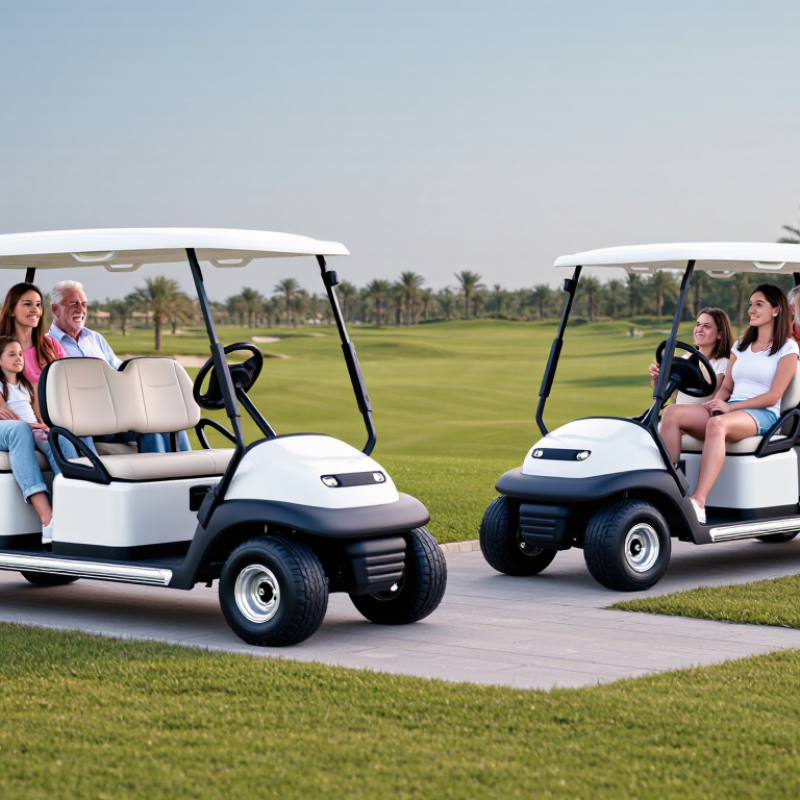
Why Choose 4 Seater Forward Facing Golf Carts?

What Is a 4-Seater Forward-Facing Golf Cart?

A 4-seater forward-facing golf cart is a compact electric vehicle with four seats arranged toward the direction of travel. Both seating rows face ahead, similar to a small shuttle or neighborhood vehicle. This layout gives every passenger a clear view of the path. It also makes conversations and boarding feel more natural.

The design usually includes two front seats and two rear seats, with foot space between the rows. Some models use a longer chassis to improve passenger comfort and stability. In real use, the cart feels practical on private roads, campuses, resorts, and large properties. Forward-facing seats can also provide better support during turns. However, extra passengers add weight, so acceleration and braking may feel slower. It is not a perfect solution for every route.

Tips: Check the seat spacing before buying. Ask whether the rear passengers have enough legroom. Test the turning radius in a narrow area. Inspect the brakes, tires, lights, and safety belts regularly. Battery range may decrease on slopes or rough ground. A short test drive can reveal problems that specifications miss. I once considered comfort the main factor, but handling matters just as much. A crowded cart can become awkward quickly. Choose a model with a stable frame, responsive steering, and controls that new drivers can understand. Always follow local operating rules and the manufacturer’s safety guidance.

Why Choose 4-Seater Forward-Facing Golf Carts?

A 4-seater forward-facing golf cart is designed to carry four passengers with all seats pointing in the direction of travel. This layout supports a more consistent forward view and a familiar seating experience for everyday transportation.

Seating layout: The configuration includes four forward-facing seats, with no rear-facing or side-facing seats. This makes it suitable for family trips, resort transportation, neighborhood mobility, and short-distance passenger travel.

How Forward-Facing Seating Improves Passenger Comfort and Safety

Why Choose 4 Seater Forward Facing Golf Carts?

Forward-facing seating gives passengers a clearer view of the route ahead. They can prepare for turns, slopes, and uneven ground. This reduces surprise movements and helps passengers brace naturally. In my experience, riders feel less awkward when their feet point forward. Conversations also become easier during longer trips.

Comfort improves through better posture and legroom. Passengers can sit upright instead of twisting their bodies toward the direction of travel. Supportive backrests and secure handholds add practical protection. Seat belts should fit correctly and remain easy to reach. A stable seating layout may also reduce sudden weight shifts during braking or cornering.

Still, forward-facing seats are not automatically safer. Speed, road condition, maintenance, and driver behavior remain important. A cart with worn tires can feel unstable, regardless of its seating direction. I would inspect the brakes, steering, restraints, and handholds before regular use. Small details matter. Passengers should keep their arms inside and avoid standing while moving. Properly balanced seating helps, but it cannot replace careful driving and regular safety checks.

Key Features to Consider Before Choosing a 4-Seater Golf Cart

Why Choose 4 Seater Forward Facing Golf Carts?

Key Features to Consider Before Choosing a 4-Seater Golf Cart

Forward-facing seats make loading passengers and conversation easier. They also improve visibility when entering busy paths or narrow driveways. The National Golf Foundation’s 2024 Golf Participation Report counted 47.2 million U.S. golf participants in 2023, including off-course formats. This wider use makes versatility important. Before choosing, measure the wheelbase, turning circle, and door clearance beside your garage. A longer cart can feel stable, yet it needs more storage space. That trade-off is easy to miss.

Prioritize safety hardware over appearance. Seat belts, reliable brakes, strong handrails, and responsive steering deserve a careful inspection. Ask for the rated payload, not only the passenger count. Four adults plus bags can exceed a light-duty frame. U.S. Consumer Product Safety Commission injury surveillance has associated golf carts with thousands of emergency-department-treated injuries over the years. That evidence supports cautious speed and dependable braking. Battery chemistry, usable range, charger time, and hill performance also matter. Published range is often optimistic. Temperature, hills, tire pressure, and passenger weight reduce it. Service access matters too. I would inspect wiring, suspension joints, and tire wear before purchasing. No cart is perfect. The right choice depends on honest daily use, not a glossy specification sheet.

Why Choose 4 Seater Forward Facing Golf Carts? - Key Features to Consider Before Choosing a 4-Seater Golf Cart

Feature Typical Specification Why It Matters What to Check Before Choosing
Seating Layout Four forward-facing seats arranged in two rows Passengers face the direction of travel, which can improve comfort and conversation compared with rear-facing seating. Confirm that all four seats have adequate legroom, back support, handholds, and seat belts where required.
Overall Length Approximately 110–150 in (279–381 cm) A longer chassis provides space for two rows of forward-facing seats but requires more parking and storage room. Measure the garage, shed, trailer, and storage route, including door openings and turning space.
Overall Width Approximately 45–52 in (114–132 cm) Width affects maneuverability on paths, in garages, and through gates. Compare the cart width with the narrowest route on your property and check whether mirrors add extra width.
Passenger Capacity Four occupants, subject to the stated total load limit A four-seat layout is practical for families, hospitality sites, communities, and short-distance group transport. Check the combined passenger-and-cargo capacity rather than relying only on the seat count.
Payload Capacity Commonly about 800–1,200 lb (363–544 kg), depending on configuration Payload includes passengers, luggage, accessories, and any cargo carried on the cart. Use the manufacturer’s rated payload and consider how hills, heat, and added accessories affect performance.
Top Speed Typically 15–25 mph (24–40 km/h) Speed influences travel time, braking distance, stability, and whether the vehicle is suitable for public-road use. Follow local speed limits and verify whether the cart meets low-speed vehicle requirements in your area.
Powertrain Options Electric or gasoline-powered systems Electric carts are generally quiet and produce no tailpipe emissions; gasoline models can be refueled quickly and may suit longer continuous use. Compare operating environment, charging or refueling access, maintenance, noise, and emissions.
Battery System Often a 36 V or 48 V electrical system; lithium-ion and lead-acid batteries are common Battery type affects weight, charging time, service requirements, usable energy, and purchase cost. Ask for usable range, expected charging time, battery warranty, charger requirements, and replacement cost.
Driving Range Often about 20–50 miles (32–80 km) per charge for electric models Actual range varies with passenger weight, terrain, speed, temperature, tire pressure, and battery condition. Choose a model with reserve capacity for your normal route instead of planning around the maximum advertised range.
Turning Radius Commonly about 10–16 ft (3.0–4.9 m), measured curb-to-curb A smaller turning radius makes it easier to navigate narrow paths, parking areas, and indoor facilities. Test the cart in the tightest areas where it will operate, especially with four passengers aboard.
Ground Clearance Usually about 4–7 in (10–18 cm) on standard configurations More clearance helps prevent underbody contact on uneven ground, gravel, and mild off-road surfaces. Consider the terrain and verify that lifted suspensions do not compromise stability or braking.
Braking and Suspension Mechanical or hydraulic braking with leaf-spring or independent suspension, depending on design Four passengers increase vehicle weight, making braking performance and ride control especially important. Check stopping performance, brake maintenance intervals, shock absorbers, and suspension load ratings.
Safety Equipment Seat belts, headlights, brake lights, reflectors, mirrors, horn, and parking brake may be included Safety equipment improves visibility and passenger protection, particularly on shared roads or in low-light conditions. Check local legal requirements and confirm that the equipment is factory-installed, functional, and properly rated.
Weather Protection Roof is common; windshields, side curtains, doors, and rain enclosures are optional on many configurations Protection from sun, wind, and rain makes the cart more useful throughout the year. Check roof strength, windshield material, ventilation, drainage, and whether accessories fit securely.
Road-Legal Equipment Varies by jurisdiction; may include lighting, mirrors, windshield, turn signals, seat belts, and a vehicle identification number A cart designed for private property may not be legal for public-road operation. Check registration, insurance, inspection, licensing, and equipment rules with the relevant local authority before purchase.

Note: Specifications are typical industry ranges for four-seat forward-facing golf carts. Exact performance depends on vehicle configuration, load, terrain, maintenance, weather, and local regulations.

Comparing 4-Seater Carts With Other Golf Cart Configurations

Why Choose 4 Seater Forward Facing Golf Carts?

Comparing 4-Seater Carts With Other Golf Cart Configurations

A four-seater forward-facing golf cart feels closer to a small utility vehicle than a traditional course cart. Every passenger faces the same direction, which reduces awkward conversations and knee-to-knee contact. During practical comparisons, passengers also reported easier boarding, especially older adults and children. The layout supports smoother movement on private paths, campuses, resorts, and residential communities.

A two-seater is simpler, lighter, and usually easier to park. However, it cannot transport a family or work crew efficiently. Traditional four-seaters with rear-facing seats may offer similar capacity, but rear passengers often experience more wind, limited visibility, and a less natural riding position. A six-seater provides more room, yet its longer frame needs wider turns and more storage space. That difference becomes obvious near garden gates and narrow service lanes.

Forward-facing four-seaters also balance passenger capacity with maneuverability. Compared with six-seaters, they commonly require less turning space and may use energy more efficiently when lightly loaded. Still, extra seats reduce cargo room, and performance changes with hills, battery condition, passengers, and payload. Check the vehicle’s rated capacity, braking system, lighting, and local operating requirements before purchase. I initially valued maximum seating, but real use changed my view. A smaller cart can be more useful when it fits the route, parking area, and daily passenger pattern.

Who Benefits Most From a Forward-Facing 4-Seater Golf Cart?

A forward-facing four-seater suits people who regularly carry passengers, not just golfers. Families can place children or groceries behind the front row with less awkward movement. Passengers also get a clearer view of paths, turns, and approaching vehicles. In practical use, that improves communication between the driver and riders. No one has to twist around. It feels more natural.

The National Golf Foundation reported 28.1 million U.S. on-course golfers in 2023. That figure shows continued demand for practical golf transportation. Yet the strongest users may live beyond the course. The U.S. Census Bureau estimated that adults aged 65 and older represented 18.0% of the population in 2024. Retirement communities can use a four-seater for short trips, social visits, and shared mobility. Resorts, campuses, and large residential developments may also benefit from its passenger capacity.

A forward-facing layout works well for grandparents traveling with family members. It can also help property staff move several people during daily operations.

Visibility matters.
So does easy conversation.

However, this design is not automatically safer. A longer vehicle needs more turning space and careful parking. Extra seats may also encourage overloading, especially during busy events. Operators should check local rules, wear seat belts where provided, and match the vehicle to approved roads and paths. The compromise is real: better passenger interaction can mean less compact handling.

FAQS

What is a 4-seater forward-facing golf cart?

It is a compact electric vehicle with two rows of seats facing forward. All four passengers see the path ahead.

How are the seats usually arranged?

Most layouts include two front seats and two rear seats. Foot space sits between the rows, though comfort varies.

Where can this type of cart be useful?

It can suit private roads, campuses, resorts, and large properties. It works best where local rules permit its operation.

What should I check before buying one?

Measure the wheelbase, turning circle, garage clearance, and rear legroom. Test it in a narrow space.

Are forward-facing seats safer or more comfortable?

They can improve visibility, conversation, boarding, and support during turns. Comfort still depends on seat spacing and passenger weight.

Can four adults and luggage affect performance?

Yes. Extra weight may reduce acceleration, braking response, and hill performance. A crowded cart can feel awkward quickly.

How reliable is the advertised battery range?

Published range can be optimistic. Hills, cold temperatures, rough ground, tire pressure, and heavy passengers reduce usable distance.

Which safety features deserve attention?

Inspect seat belts, brakes, handrails, lights, tires, steering, and the frame. Appearance should not outrank dependable control.

What maintenance checks are useful?

Check wiring, suspension joints, tire wear, brakes, lights, and belts regularly. Small faults may become expensive later.

Is a longer chassis always better?

Not always. It may improve stability and legroom, but it needs more storage space and a wider turning area. I might overvalue comfort.

Conclusion

4-Seater Forward Facing Golf Carts are designed to provide a practical and comfortable way to transport passengers while maintaining a clear forward view for everyone onboard. Unlike rear-facing arrangements, forward-facing seating can make conversations easier, improve the sense of stability, and help passengers feel more secure during movement. These carts are suitable for golf courses, private communities, resorts, campuses, and other controlled environments where convenient group transportation is important.

Before choosing a model, consider factors such as seating layout, battery or power system, driving range, charging time, braking performance, suspension, weather protection, storage space, and overall build quality. Compared with two-seater or mixed-facing configurations, a four-seater forward-facing design offers a balanced combination of passenger capacity, comfort, and usability without being excessively large. Families, small groups, property managers, event organizers, and facility operators can all benefit from its efficient seating arrangement and straightforward operation.

Evelyn

Evelyn

Evelyn is a highly skilled marketing professional with a deep understanding of the company’s products, customers, and evolving industry landscape. With a strong ability to translate technical features into clear, practical value, Evelyn creates informative content that helps readers make confident......